Choosing Plants for Pool Surrounds
You know that sinking feeling when you step out for a morning swim and see the water covered in leaves? It is the quickest way to ruin a relaxing weekend.
We see this happen far too often with Melbourne pool owners.
The wrong plant choices turn a backyard oasis into a maintenance nightmare of constant skimming, clogged filters, and stained pavers.
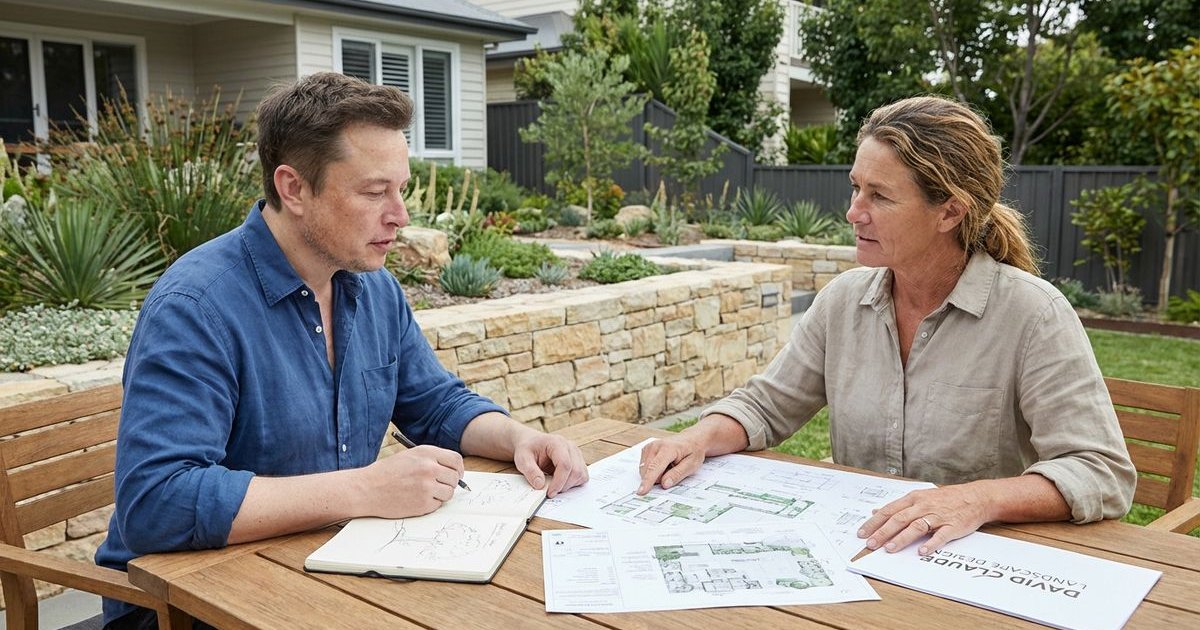
Our team at David Claude Landscape Design focuses on creating pool landscaping environments that are as practical as they are beautiful.
This guide covers the best plants for Melbourne pool surrounds, the strict safety regulations you need to know, and the specific varieties that handle our clay soils and variable weather.
The “Non-Climbable Zone”: A Safety Critical First Step
Before we talk about aesthetics, we must address compliance.
Victoria has some of the strictest pool fencing laws in the world.
We cannot plant anything climbable within the 900mm “Non-Climbable Zone” (NCZ) on the outside of your pool fence.
This includes trees with low branches, sturdy shrubs, or even pot plants that a child could use as a foothold.
Key Compliance Checks:
- The 900mm Arc: Measure a 900mm arc from the top of the fence downwards.
- No Footholds: Any horizontal surface greater than 10mm in depth is considered a foothold.
- Gap Management: Plants must not create gaps under the fence or compromise the latching mechanism of the gate.
Ignorance of this rule is the most common reason we see pools fail safety inspections.
You can still have greenery, but it needs to be the right kind—soft groundcovers or grasses that cannot support weight.
What Makes a Good Pool Plant?
Essential Characteristics
Minimal Debris This is the single biggest factor in reducing your maintenance workload. Avoid plants that drop:
- Small, fibrous flowers (like Bottlebrush bristles) that slip through skimmer baskets.
- Berries or fleshy fruits that stain paving.
- Sticky sap or resin.
- Fine seeds that blow into the water.
Non-Invasive Roots Pool shells and underground pipework are incredibly expensive to repair. We strictly avoid plants with aggressive root systems like Ficus or Bamboo (even some clumping varieties can be risky near plumbing). You need plants with fibrous, non-aggressive roots that respect boundaries.
Stain Resistance for Paving Bluestone and Travertine are popular choices for Melbourne pool decks, but they are porous. We have seen expensive Bluestone ruined by organic tannins from rotting leaves or acidic berries. If you have natural stone coping, choose plants with large, dry leaves that are easy to sweep up before they decay.
Tolerance of Melbourne’s “Four Seasons” Your pool plants face a brutal microclimate. They get reflected heat from the water and paving in summer (often exceeding 40°C), followed by cold, wet winters. North-eastern suburbs often deal with heavy clay soils that become waterlogged in winter and rock-hard in summer.
Top Performers for Melbourne Pools
Palms and Tropical Accents
Howea forsteriana (Kentia Palm)
- Height: 2-10m (slow growing)
- Why it works: It is the ultimate luxury pool plant.
- Best feature: Unlike the Golden Cane Palm, which often looks yellow and sickly in Melbourne winters, the Kentia thrives in our cooler climate and tolerates shade well.
Archontophoenix cunninghamiana (Bangalow Palm)
- Height: 10-20m
- Why it works: A native Australian icon that handles full sun better than the Kentia.
- Warning: It is self-cleaning, meaning heavy fronds will drop occasionally, so plant it slightly back from the water’s edge to avoid splash damage.
Cycas revoluta (Japanese Sago)
- Height: 1-1.5m
- Why it works: It provides a prehistoric, architectural look with zero leaf drop.
- Insider Tip: Watch out for the sharp tips; keep them away from high-traffic walkways where bare skin might brush against them.
Strappy and Architectural Plants
Agave attenuata (Fox Tail Agave)
- Height: 1m
- Spread: 1m
- Why it works: This is the “soft” agave with no spikes, making it safe for kids and pool toys.
- Maintenance: It is virtually unkillable and drought-tolerant, perfect for pots or hot, north-facing walls.
Lomandra ‘Tanika’ or ‘Nyalla’
- Height: 50cm - 80cm
- Why it works: These improved cultivars of native grass are incredibly disciplined.
- Performance: They tolerate the heavy clay soils of the north-east suburbs and won’t brown off in summer like some exotic grasses.
Strelitzia nicolai (Giant Bird of Paradise)
- Height: 4-6m
- Why it works: It gives an instant jungle feel with massive, banana-like leaves.
- Caution: The clumps can get wide and powerful, so we only plant these in generous garden beds, never in narrow strips near coping.
Screening Shrubs (Privacy Heroes)
Murraya paniculata (Orange Jessamine)
- Height: 3-4m (can be pruned lower)
- Why it works: Dense, glossy green foliage that smells like jasmine on warm summer nights.
- Maintenance: It requires regular clipping to keep it formal, but the result is a classic, high-end look.
Westringia ‘Grey Box’
- Height: 40cm - 60cm
- Why it works: If you need a low hedge that won’t obscure the pool view, this native is unbeatable.
- Durability: It laughs at salt spray (great for saltwater pools) and handles reflected heat without wilting.
Callistemon ‘Little John’
- Height: 1m
- Why it works: A dwarf bottlebrush with stunning blue-grey foliage and deep red flowers.
- Value: It stays compact naturally, saving you hours of pruning work compared to standard bottlebrushes.
Plant Comparison: Maintenance vs. Impact
| Plant Name | Visual Impact | Debris Level | Water Needs | Best Use |
|---|---|---|---|---|
| Kentia Palm | High (Luxury) | Very Low | Low | Feature plant |
| Star Jasmine | High (Green Wall) | Medium (Flowers) | Medium | Screening fences |
| Agave Attenuata | High (Sculptural) | Zero | Very Low | Pots/Poolside |
| Westringia | Medium (Formal) | Low | Low | Low hedging |
| Lomandra | Low (Textural) | Low | Very Low | Groundcover |
Plants to Avoid Near Pools
High Debris Producers
Bougainvillea
- The Issue: Those stunning coloured bracts are paper-thin and clog skimmers instantly.
- The Pain: The thorns are vicious and hazardous to swimmers in bare feet.
Jacaranda
- The Issue: A double threat of sticky flowers in spring and tiny fern-like leaves in autumn.
- The Result: The purple flowers turn into a brown sludge that stains light-coloured paving and is a nightmare to scrub off.
Bamboo (Running Varieties)
- The Issue: Even with root barriers, running bamboo is an escape artist.
- The Risk: The rhizomes are strong enough to lift pavers and crack pool shells. Stick to clumping varieties like Bambusa textilis ‘Gracilis’ if you must have bamboo, and keep it in pots.
Planting Design Tips for Challenging Terrain
Many of our clients in the inner-eastern and north-eastern suburbs deal with significant slopes.
We often use terracing to turn a steep hill into a usable poolside landscape.
Stabilizing Slopes
Steep banks near pools can lead to mud runoff during heavy rains (like we saw in early 2024). Use deep-rooting groundcovers like Myoporum parvifolium to bind the soil. Build low retaining walls to create flat planting zones; this prevents mulch from washing into the pool.
Managing Scale
Scale is critical for a balanced look. A common mistake is planting large palms in narrow beds (under 500mm wide). They will eventually lean over the water or lift the coping. Ensure your garden beds are at least 1m wide if you plan to use screening shrubs.
Maintenance Access
Design for the future, not just planting day. Leave a 600mm service path behind your screening plants so you can prune the back against the fence. If you can’t reach it, weeds will take over, and neighbors will complain about the overhang.
Creating Your Pool Garden
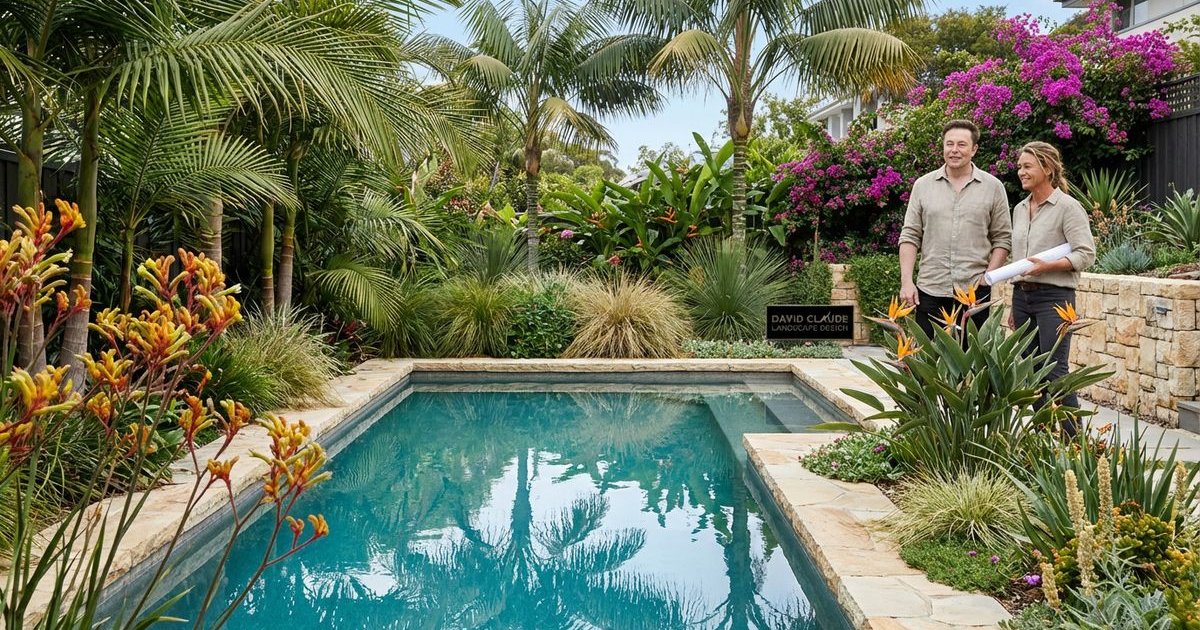
The right plant selection transforms a pool from a chore into a private resort.
We believe your garden should enhance your lifestyle, not dictate your weekend schedule.
Consider your soil type, the 900mm safety zone, and your tolerance for sweeping before you dig the first hole.
Contact us to discuss your pool landscaping project and create the perfect, compliant poolside environment for your Melbourne home.