The Impact of a Great Tree
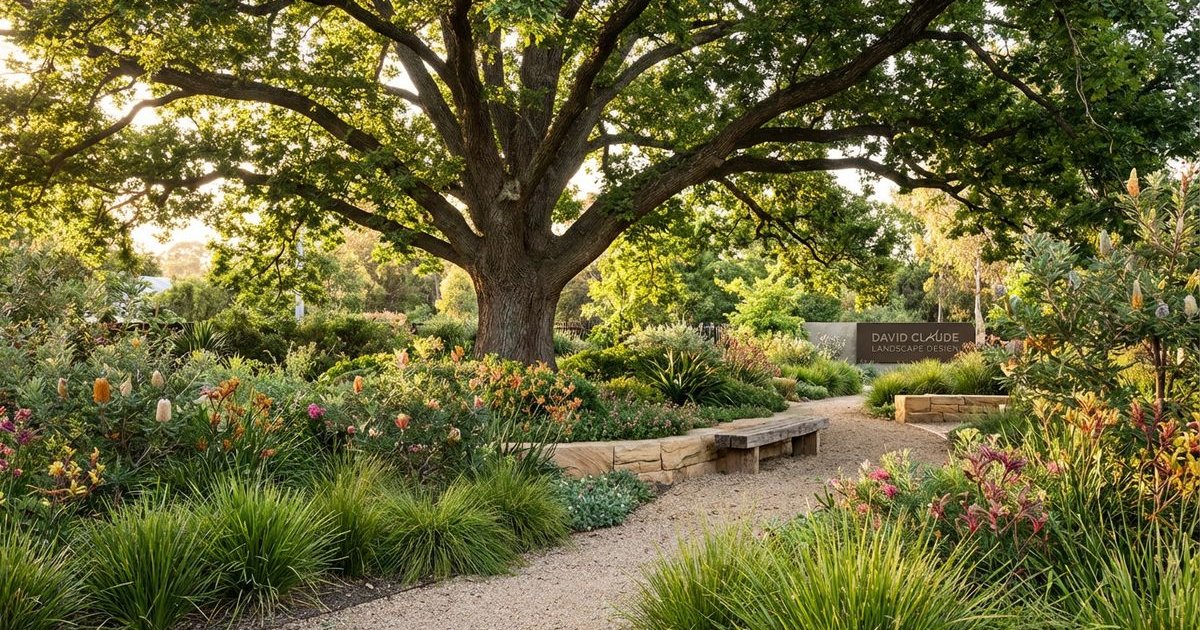
A well-chosen specimen tree does more than any other single plant to define a garden’s character. It provides shade, creates vertical drama, offers seasonal interest, and develops a presence that grows over decades.
We see this impact firsthand in nearly every planting and gardens project we complete. A strategic tree selection transforms a flat backyard into a landscape with depth and history. From what we have observed, the right tree can increase perceived property value by up to 20% when it matures into a structural asset.
This guide helps you select the right specimen tree for your Melbourne property.
What Makes a Specimen Tree?
Definition
A specimen tree is planted as a focal point, a tree chosen for its outstanding qualities and given space to display them:
- Planted where it can develop its natural form
- Selected for specific visual or functional impact
- Given prominence in the design
- Often placed in lawns or feature beds
Qualities to Consider
- Form: Shape and structure (spreading, upright, weeping)
- Size: Ultimate height and spread
- Features: Flowers, bark, autumn colour, fruit
- Evergreen or deciduous: Year-round screening vs winter sun
- Growth rate: How quickly will it establish?
Australian Native Specimen Trees
Eucalyptus for Gardens
Not all gums suit gardens, but some make excellent specimens. We find that specific smaller cultivars offer the iconic “bush” look without the danger of massive limb drops.
Eucalyptus caesia ‘Silver Princess’
- Height: 6-8m
- Feature: Weeping silver foliage and large pink-red flowers.
- Why we love it: This tree is perfect for adding softness to angular modern architecture.
- Pro Tip: Stake this tree well for the first 18 months as the weeping habit can make it top-heavy in high winds.
Eucalyptus ‘Little Spotty’
- Height: 6-8m
- Feature: Attractive mottled bark.
- Value: Compact size makes it manageable for suburban blocks.
- Best Use: excellent for medium-sized gardens where you want filtered light rather than deep shade.
Corymbia ficifolia (Red Flowering Gum)
- Height: 6-10m
- Feature: Spectacular red flowers.
- Selection Advice: Always buy a grafted variety like ‘Wildfire’ to guarantee the flower colour.
- Significance: An iconic Australian tree that attracts native birds.
Other Native Options
Acacia pycnantha (Golden Wattle)
- Height: 4-8m
- Feature: Brilliant yellow winter flowers.
- Growth: Fast growing.
- Symbolism: National floral emblem.
Brachychiton acerifolius (Illawarra Flame Tree)
- Height: 10-15m
- Feature: Red flowers (deciduous when flowering).
- Display: Impressive summer display.
- Condition: Needs a warm position protected from frost while young.
Small Native Trees
Banksia serrata (Old Man Banksia)
- Height: 3-6m
- Feature: Sculptural form, distinctive flowers.
- Ecology: Bird attracting.
- Character: Develops a gnarled, ancient look that adds instant history to a new garden.
Exotic Specimen Trees
Deciduous Options
Acer palmatum (Japanese Maple)
- Height: 3-6m
- Feature: Autumn colour, delicate form.
- Variety: ‘Seiryu’ is a specific cultivar we recommend for Melbourne as it handles the heat better than others.
- Requirement: Needs afternoon shade in hot areas.
Cercis canadensis ‘Forest Pansy’
- Height: 5m
- Feature: Stunning heart-shaped purple foliage that contrasts against green gardens.
- Visuals: Pink flowers appear on bare wood in early spring before leaves emerge.
- Warning: The branches are brittle, so plant it in a position protected from strong north winds.
Lagerstroemia indica (Crepe Myrtle)
- Height: 4-8m
- Feature: Summer flowers, autumn colour, decorative bark.
- Cultivars: ‘Natchez’ (White) and ‘Tuscarora’ (Coral) are standout performers in our climate.
- Suitability: Excellent for Melbourne climate due to heat tolerance.
Pyrus ‘Chanticleer’ (Ornamental Pear)
- Height: 8-12m
- Feature: White spring flowers, autumn colour.
- Form: Upright form suits smaller spaces.
- Reliability: Very reliable performer.
Liquidambar styraciflua (Sweet Gum)
- Height: 15-25m
- Feature: Outstanding autumn colour.
- Space: Needs space for ultimate size.
- Caution: Surface roots can lift concrete, so keep it away from paving and driveways.
Evergreen Options
Olea europaea (Olive)
- Height: 6-10m
- Feature: Silver foliage, gnarled character with age.
- Style: Mediterranean character.
- Resilience: Very drought tolerant once established.
The Magnolia Dilemma: Little Gem vs Teddy Bear
We frequently help clients choose between these two popular Magnolias. This comparison table highlights why the choice matters for your specific space.
| Feature | Magnolia ‘Little Gem’ | Magnolia ‘Teddy Bear’ |
|---|---|---|
| Mature Height | Taller (6m+) | Compact (4m) |
| Growth Habit | Faster, more open/leggy | Slower, very dense/bushy |
| Leaf Appearance | Smaller, narrower leaves | Large, round “cup” leaves |
| Best Use | High screening along fences | Feature pots or tight courtyards |
| Maintenance | Needs regular pruning to thicken | Naturally holds a tight shape |
Selection Criteria
Space Available
Be realistic about ultimate size:
| Garden Size | Maximum Tree Height |
|---|---|
| Courtyard | 4-6m |
| Small suburban | 6-10m |
| Medium suburban | 10-15m |
| Large property | 15m+ |
Handling Slopes and Clay Soil
Many homes in Melbourne’s north-east (like Eltham or Doncaster) sit on heavy clay or sloping blocks. We find that standard advice often fails here.
For Sloping Terrain:
- Banksia integrifolia (Coast Banksia): Excellent for binding soil on banks.
- Acacia melanoxylon (Blackwood): Strong root systems help stabilize steep gradients.
For Clay Soil:
- Preparation is Key: You must dig in gypsum and organic compost to break up the clay before planting.
- Plant High: Mound the soil slightly so the tree’s root crown sits above the natural ground level to prevent waterlogging.
Distance from Structures
General guidelines:
- Half mature canopy spread from buildings
- Further from swimming pools
- Consider root zones for services
- Foundation impact assessment for large trees
Purpose
Shade Consider canopy spread and density:
- Deciduous for summer shade, winter sun
- Evergreen for year-round shade
- Open canopy for dappled light
Screening For privacy:
- Evergreen species
- Dense canopy
- Positioned for sightline blocking
Focal Point For visual impact:
- Outstanding feature (flowers, bark, form)
- Positioned for maximum appreciation
- Framed by surrounding planting
Council Regulations and Overlays
You must check your local planning scheme before removing or planting trees. Areas like Nillumbik, Boroondara, and Yarra Ranges often have Significant Landscape Overlays (SLO).
- The Rule: A permit is often required to remove any tree taller than 5m or with a trunk circumference greater than 0.5m.
- The Risk: Fines for illegal removal can be substantial.
- The Action: Call your local council or speak to a landscape architect to verify the overlays on your title.
Sourcing Quality Trees
Size at Purchase and 2025 Pricing
Advanced Trees (45L - 75L pots)
- Cost: Approx. $150 - $350 AUD.
- Benefit: Immediate impact with a height of 1.5m to 2m.
- Recommendation: This is the “sweet spot” for value and establishment success.
- Care: Establishment is critical.
Super Advanced (100L - 400L bags)
- Cost: $600 - $1,500+ AUD.
- Benefit: Instant maturity and screening.
- Risk: Higher transplant shock risk and requires professional installation.
Tubestock/Small Pots
- Cost: $5 - $20 AUD.
- Benefit: Very economical.
- Growth: Establish quickly and often catch up to advanced trees within 3-5 years.
- Trade-off: Long wait for visual impact.
Where to Buy
- Specialist tree nurseries
- Selected wholesale nurseries
- Avoid impulse purchases from hardware stores
- Request advice on suitability
Planting and Establishment
Critical Success Factors
- Adequate hole size (3x root ball width)
- Appropriate backfill
- Deep watering system for establishment
- Staking if required (remove after establishment)
- Mulching without burying trunk
Establishment Period
- First year: Regular deep watering is essential, especially from December to March.
- Second year: Reduced but consistent watering.
- Third year onwards: Rainfall may suffice.
- Ongoing: Monitor during drought.
Your Perfect Tree
The right specimen tree will give you decades of pleasure and become a defining feature of your garden. Take time to choose wisely.
Contact us to discuss specimen tree selection for your Melbourne property.