The Great Plant Debate
Should Melbourne gardens be planted with native species or are exotics equally valid? It’s a question that generates passionate opinions, especially when you’re dealing with the heavy clay soils and steep gradients common in our north-eastern suburbs. The truth is more nuanced—both have their place, and the best gardens often combine both thoughtfully.
Understanding the Terms
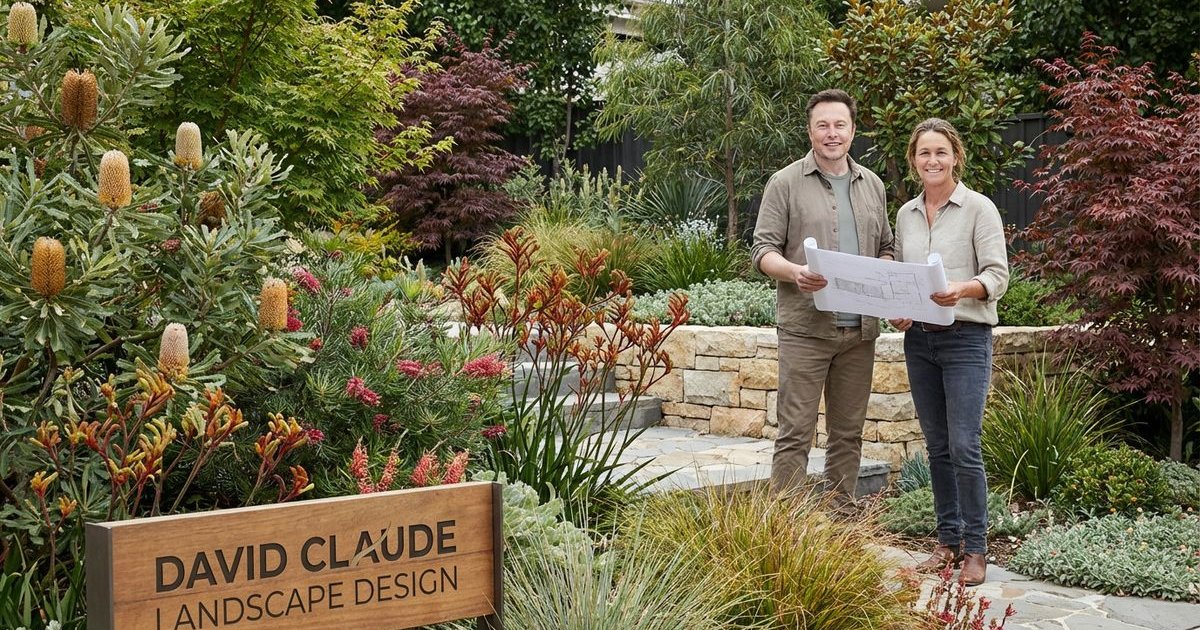
What Are Native Plants?
For gardening purposes, “native” typically means:
- Indigenous: Naturally occurring in your specific area (e.g., plants from the Middle Yarra ecosystem for Banyule residents).
- Australian native: From anywhere in Australia (like a Grevillea from Queensland).
- Cultivar: Bred varieties of native species (such as the compact Acacia ‘Limelight’).
Each category has different implications for wildlife and ecology.
What Are Exotic Plants?
Exotic plants come from elsewhere:
- Mediterranean species (Olives, Lavender)
- South African plants (Clivia, Agapanthus)
- New Zealand species (Flax, Pittosporum)
- Northern hemisphere plants (Japanese Maples, Oaks)
Some exotics are well-adapted to Melbourne, while others struggle without constant support.
Benefits of Native Plants
Ecological Value
- Wildlife habitat: Food and shelter for local birds, insects.
- Pollinators: Support native bees and butterflies.
- Biodiversity: Contribute to local ecosystem health.
Practical Benefits
- Adapted to conditions: Evolved for Melbourne’s climate.
- Water-wise: Many require no irrigation once established.
- Low maintenance: Generally need less feeding and care.
- Pest resistance: Natural resistance to local pests.
Aesthetic Appeal
- Unique character: Australian plants have distinctive beauty.
- Year-round interest: Many flower in winter.
- Textural variety: Grasses, strappy plants, sculptural forms.
Spotlight: Erosion Control for Sloping Blocks
If you live in Manningham or Nillumbik, keeping your soil on the hill is a priority. Deep-rooted natives are exceptional for this.
- Lomandra longifolia (Tanika): Its extensive root system binds soil effectively.
- Myoporum parvifolium: A rapid-growth groundcover that acts as a living mulch.
- Correa glabra: Thrives on embankments and tolerates rocky terrain.
Benefits of Exotic Plants
Design Flexibility
- Wider palette: More species to choose from.
- Formal options: Better for traditional garden styles.
- Specific effects: Sometimes only exotics achieve certain looks.
Familiar Favourites
- Roses and camellias: Classic garden plants.
- Deciduous trees: Autumn colour and winter sun.
- Productive plants: Many fruit and vegetables are exotic.
Specific Conditions
- Deep shade: Some exotics perform better than natives.
- Poor soil: Certain exotics tolerate difficult conditions.
- Coastal exposure: Mediterranean plants excel.
Spotlight: The Acid Soil Advantage
Parts of the outer east and the Dandenong Ranges have acidic soil that natives love, but so do some spectacular exotics.
- Japanese Maples (Acer palmatum): Thrive in protected, acidic pockets.
- Camellias: Offer structure and fire-retardant properties, which is crucial for Bushfire Management Overlay (BMO) zones.
- Magnolias: Provide large, glossy foliage that contrasts well with fine-leafed natives.
Combining Native and Exotic
The Best of Both
Many successful Melbourne gardens blend both:
- Framework of natives: Structure and habitat.
- Exotic accents: Specific effects and flowers.
- Thoughtful integration: Not random mixing.
Design Approaches
Native Foundation, Exotic Highlights Use natives for the majority of planting with selected exotics as focal points.
Zone-Based Mixing Native areas near boundaries, mixed areas near house.
Layered Integration Native canopy, mixed understory, combined groundcover.
The 70/30 Rule
We often apply a ratio of 70% native to 30% exotic for clients wanting a “Melbourne Contemporary” look. This balance ensures the garden remains drought-resilient while allowing for seasonal splashes of colour from plants like Salvias or Sedums.
What to Avoid
- Invasive exotics that spread into bushland (e.g., English Ivy, Agapanthus near waterways)
- Water-hungry exotics in dry areas
- Random mixing without design intent
- Plants unsuited to your conditions
Making Your Decision
Consider Your Site
Bushland fringe properties: Strong case for predominantly native. Suburban gardens: More flexibility for mixing. Inner urban: Often more suited to exotics or mixed.
Consider Your Goals
Wildlife garden: Emphasise natives, especially indigenous. Formal design: May require some exotics. Low maintenance: Natives often win. Maximum flowers: May need both.
Consider Your Aesthetic
Australian bush feel: Predominantly native. English cottage: More exotics. Mediterranean: Hardy exotics. Contemporary: Both can work.
Comparison: Maintenance & Cost
| Feature | Native Garden | Exotic Garden |
|---|---|---|
| Water Needs | Low (once established) | Moderate to High |
| Fertiliser | Minimal (low phosphorus) | Regular feeding required |
| Pruning | Annual tip pruning | Seasonal hedging/deadheading |
| Soil Prep | Gypsum for clay | Organic matter/Compost |
| Long-term Cost | Lower | Higher (water/inputs) |
Council Overlays and Restrictions
Some Melbourne councils have vegetation requirements:
- Significant landscape overlays: May require native planting.
- Bushfire zones: Native planting may be discouraged.
- Heritage areas: May specify plant types.
- Environmental significance overlays: Native focus.
Always check local requirements before planning.
Knowing Your Zone
If you are in a Significant Landscape Overlay (SLO) in Boroondara or a Vegetation Protection Overlay (VPO) in Banyule, you may need a permit to remove vegetation or conduct earthworks. These overlays often mandate planting indigenous canopy trees to maintain the “leafy character” of the suburb.
Practical Planting Guidelines
Starting with Natives
If you’re new to native plants:
- Start with reliable performers (Westringia, Correa, Lomandra).
- Source from reputable native nurseries.
- Prepare soil with appropriate conditions.
- Avoid over-watering once established.
- Minimal fertilising (natives don’t need much).
Choosing Exotics Wisely
When selecting exotics:
- Choose species adapted to Melbourne’s climate.
- Avoid known invasive species.
- Consider water requirements.
- Match to your site conditions.
- Ensure they complement, not compete with, natives.
Managing Melbourne Clay
Our team frequently encounters heavy clay soil in Doncaster and Templestowe. Gypsum is your best friend here. Breaking up the clay with gypsum and adding organic compost 6-8 weeks before planting transforms concrete-like ground into a workable medium that roots can actually penetrate.
Our Approach
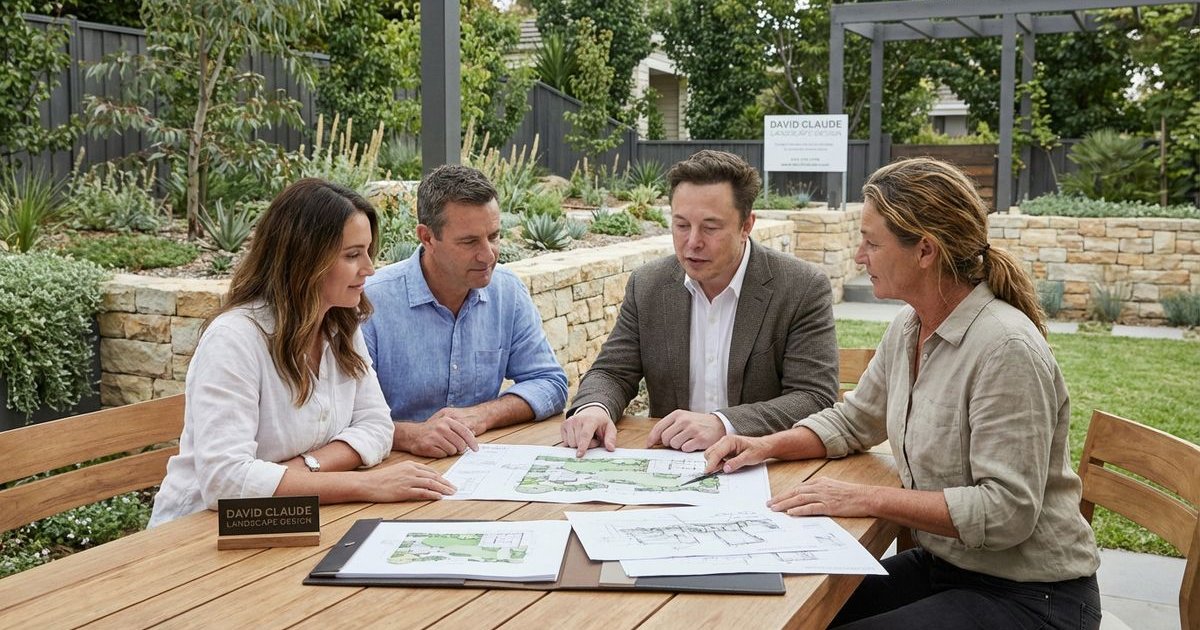
At David Claude Landscape Design, we believe in appropriate planting and gardens for each site. This philosophy means we assess the slope, soil pH, and local overlays before drawing a single line. Sometimes that means predominantly native, sometimes mixed, occasionally focused on exotics.
What matters is creating gardens that thrive, look beautiful, and meet your needs.
Contact us to discuss the right planting approach for your Melbourne garden.