Choosing the Right Retaining Wall Material
The material you choose for retaining walls significantly affects both appearance and performance. As part of our steep block solutions, this guide compares the main options available for Melbourne gardens, helping you make an informed decision.
The “1-Metre Rule” and Melbourne Regulations
Before we compare materials, you need to know the most critical number in Victorian landscaping: one metre.
We see many homeowners caught off guard by this regulation. In Victoria, any retaining wall one metre or higher requires a building permit and a structural engineer’s design.
There is a major exception regarding your property boundaries. Even if a wall is only 600mm high, you must obtain a permit if it is close enough to a boundary to impact the neighbor’s land. We call this “protection of adjoining property works.” Ignoring this can lead to council fines and expensive retroactive engineering.
Always check your local council overlays before digging.
Timber Sleeper Walls
Overview
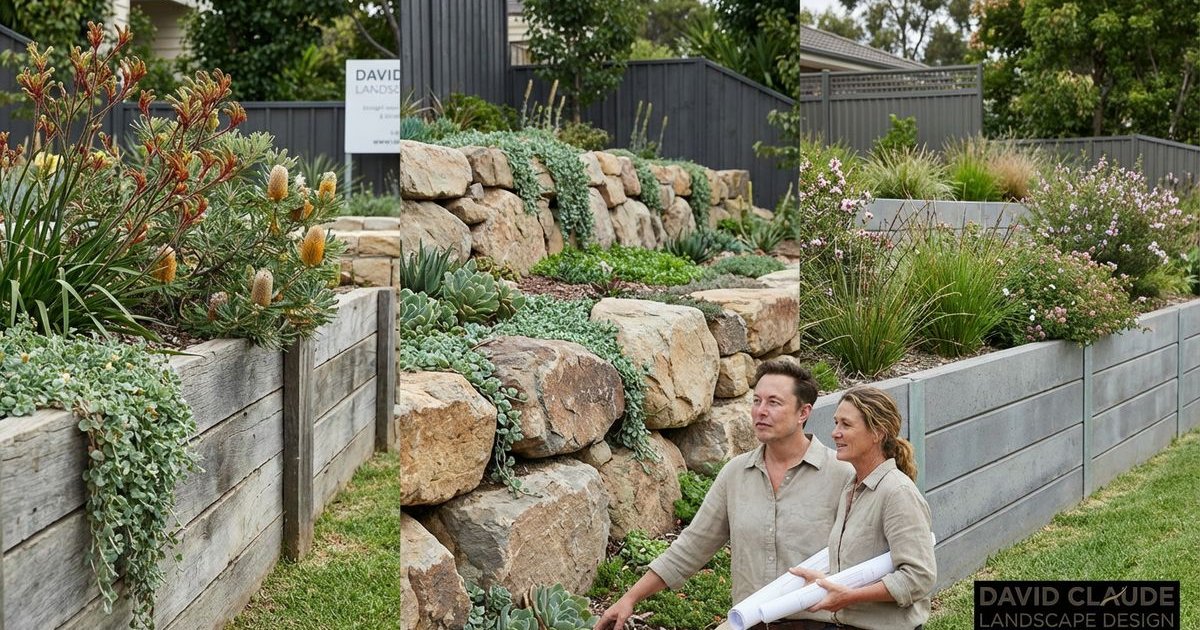
The traditional Melbourne choice, timber sleepers create warm, natural-looking walls suited to many garden styles. They are particularly common in the leafy eastern suburbs where they blend with native planting.
Types Available
New Hardwood Sleepers
- Ironbark or Grey Gum: These are the gold standard for hardwood. They offer a clean, consistent appearance and natural resistance to termites.
- Lifespan: You can expect 15-25 years from high-quality hardwood classes.
Treated Pine Sleepers (The H-Rating Matters)
- H4 Treated Pine: This is the standard “in-ground” timber sold at hardware stores. It resists rot but has limits.
- H5 Treated Pine: This is the professional choice for structural walls. The H5 treatment penetrates deeper and is designed for critical structural components submerged in wet soil.
- Lifespan: 10-15 years for H4, up to 25 years for H5.
Recycled Railway Sleepers
- Character: These provide a rustic patina that new timber cannot match.
- Grading: Quality varies wildly from “A Grade” (solid) to “C Grade” (landscaping only).
- Warning: Old railway sleepers often contain oil or creosote, which can bleed into soil on hot days.
Construction Method
We install steel or timber posts concreted into the ground at precise intervals. Sleepers are then stacked horizontally behind these posts.
Proper drainage is the secret to longevity. We place a 100mm agricultural pipe (ag pipe) at the base and backfill with 20mm scoria or blue metal gravel. This prevents water pressure from building up and warping the timber.
Pros
- Natural, warm appearance blends with gardens
- Lowest upfront material cost
- Easy to cut and shape for curved garden beds
- Slight flexibility allows for minor ground movement
Cons
- Limited height capacity (typically capped at 1.2m effectively)
- Will eventually rot and require replacement
- Grey aesthetics develop quickly if not oiled annually
- Termites can still breach barriers over long periods
Best For
- Garden terraces in established leafy suburbs
- Walls under 1m in height
- Projects with strict budget constraints
- Accessible areas where future replacement is possible
Cost Indication
$250-$450 per square metre (installed).
Natural Rock Walls
Overview
Stone walls create dramatic, naturalistic effects that suit bushland and informal gardens. In the north-eastern suburbs like Eltham or Warrandyte, these walls often use local stone to match the indigenous landscape.
Types Available
Mudstone Boulders
- Appearance: Earthy yellows, browns, and greys.
- Shape: Large, irregular boulders.
- Region: Very common in Melbourne’s north-east.
Bluestone Pitchers & Float
- Appearance: Dark grey to charcoal.
- Heritage: The iconic “Melbourne look” often seen in inner-city laneways and heritage homes.
- Format: Can be large irregular “floaters” or square-cut pitchers.
Coldstream Rock
- Appearance: Sharp, angular edges with grey and rusty tones.
- Texture: Rugged and highly structural.
Construction Method
Gravity is the main stabilizer here. We do not use mortar for boulder walls. Instead, we use a technique called “battering.”
This means stacking the rocks so the wall leans back into the slope. The weight of the rock combined with friction holds the earth back. Large “key stones” are placed at the bottom to anchor the entire structure.
Pros
- Incredible lifespan (stone does not rot)
- Excellent natural drainage through gaps
- Creates habitat pockets for lizards and small wildlife
- Graffiti resistant (uneven surfaces deter tagging)
Cons
- Large “footprint” requires significant garden space for the batter
- Not suitable for tight, vertical boundaries
- Requires heavy machinery access for placement
- Pricing fluctuates based on quarry availability
Best For
- Bushland and native gardens
- Properties with ample space
- Correcting large slopes where precision isn’t critical
- Feature walls in front gardens
Cost Indication
$220-$550 per square metre (highly variable based on rock type and access).
Concrete Sleeper Walls
Overview
The workhorse of Melbourne retaining walls—strong, economical, and capable of significant heights. These have largely replaced timber for boundary walls due to their “set and forget” nature.
Types Available
Plain Concrete (The “Smooth Grey”)
- Appearance: Utilitarian and industrial.
- Usage: Best for side boundaries or areas hidden by planting.
- Finish: Can be painted, but often left raw.
Textured & Patterned Sleepers
- Stackstone: Mimics the look of dry-stacked slate.
- Woodgrain: Replicates the texture of timber sleepers without the rot.
- Colours: Charcoal and sandstone are the most popular Melbourne choices.
Construction Method
This system relies on Galvanised Steel Posts. We typically use 100UC (Universal Columns) or H-beams concreted deep into footings.
The concrete sleepers slide down between the steel channel tracks. This creates a rigid, rot-proof barrier. Because the sleepers are heavy (often 80kg+), we use mechanical lifters during installation.
Pros
- Zero risk of rotting or termite damage
- Posts are galvanised steel for 50+ year life
- Thinner profile than rock walls (saves yard space)
- Engineered for heights up to 3m+
- Low maintenance
Cons
- Industrial aesthetic can feel cold
- Hard to modify once installed (can’t easily cut to size)
- Steel posts may rust in high-salinity coastal areas
- Reflected heat can be an issue for delicate plants
Best For
- Boundary fences and structural support
- Steep driveways needing vertical walls
- Homeowners who want zero maintenance
- Tight spaces where width is limited
Cost Indication
$400-$800 per square metre (installed and engineered).
Rendered Masonry (Blockwork) Walls
Overview
Clean, contemporary walls built from concrete blocks with a rendered and painted finish. This is the premium choice for modern architecture in suburbs like Balwyn, Kew, and Brighton.
Construction Method
We build these using 20.01 standard concrete masonry units (often called Besser blocks). The process is intensive:
- Pour a reinforced concrete strip footing.
- Lay blocks with mortar and install steel reinforcement bars (reo) vertically.
- “Core fill” the hollow blocks with liquid concrete.
- Apply a waterproof membrane (bitumen) to the rear side.
- Render and paint the front face.
Pros
- Seamless integration with modern home architecture
- Can incorporate lighting, seating, and letterboxes
- Massive structural strength
- Offers the cleanest lines of any material
- Completely customizable colour
Cons
- Highest cost option due to labour intensity
- Drainage failure can cause “efflorescence” (white salt stains)
- Render may develop hairline cracks over time
- Requires a multi-trade team (concreter, bricklayer, renderer)
Best For
- Modern architectural homes
- Pool surrounds and courtyards
- Front fences and visible feature walls
- High-end projects increasing property value
Cost Indication
$600-$1,000+ per square metre (depending on finish quality).
Comparison Summary
| Material | Height Capacity | Relative Cost | Lifespan | Main Advantage | DIY Friendly? |
|---|---|---|---|---|---|
| Timber | Low (under 1.2m) | Low-Med | 15-20 yrs | Natural Aesthetic | Yes |
| Natural Rock | Medium | Variable | 50+ yrs | Organic Look | No |
| Concrete Sleeper | High (3m+) | Medium | 50+ yrs | Zero Maintenance | No |
| Rendered Block | High | High | 50+ yrs | Architectural Finish | No |
Factors in Your Decision
Site Conditions
Steep Slopes: You likely need engineered solutions like concrete sleepers or core-filled blockwork to handle the sheer weight of the soil.
Access Issues: If we cannot get a machine into your backyard, heavy rock or concrete sleepers become very expensive to install manually. Timber is often the only viable choice for tight access sites.
Soil Type: Melbourne’s north-east has heavy clay soils. This reactive soil expands when wet, putting immense pressure on walls. We recommend steel-reinforced concrete solutions for these areas.
Budget
Entry Level: Treated pine timber is your best starting point.
Mid-Range: Textured concrete sleepers or basic boulder walls offer better longevity for a moderate increase in price.
Premium: Rendered masonry or hand-stacked bluestone offers the highest finish but requires the largest investment.
Timeline
Speed Priority: Concrete sleeper walls are the fastest to install once the posts are set.
Patience Required: Rendered walls take weeks due to the curing time required between the footing, blockwork, and rendering stages.
Making Your Decision
The right choice depends on your specific circumstances. Consider these five questions:
- Is the wall purely functional or a visual feature? (Hide functional walls with concrete sleepers; highlight feature walls with stone or render).
- How long do you plan to live there? (If 5+ years, avoid timber).
- What is the access width? (Less than 1m width rules out large rocks).
- Are you near a boundary? (You may need a permit regardless of height).
- What is your drainage plan? (Water kills walls faster than weight).
For walls over 1m or those supporting loads, always engage a structural engineer and experienced contractor.
Contact us to discuss retaining wall options for your Melbourne property.